




A Cardinal Plot is a plot that is perfectly aligned with the four main directions — North, South, East, and West. Such plots follow the Earth's natural directional flow, making them highly preferred in Vastu.
They are believed to support stability, balance, and smooth energy movement for construction and living spaces.
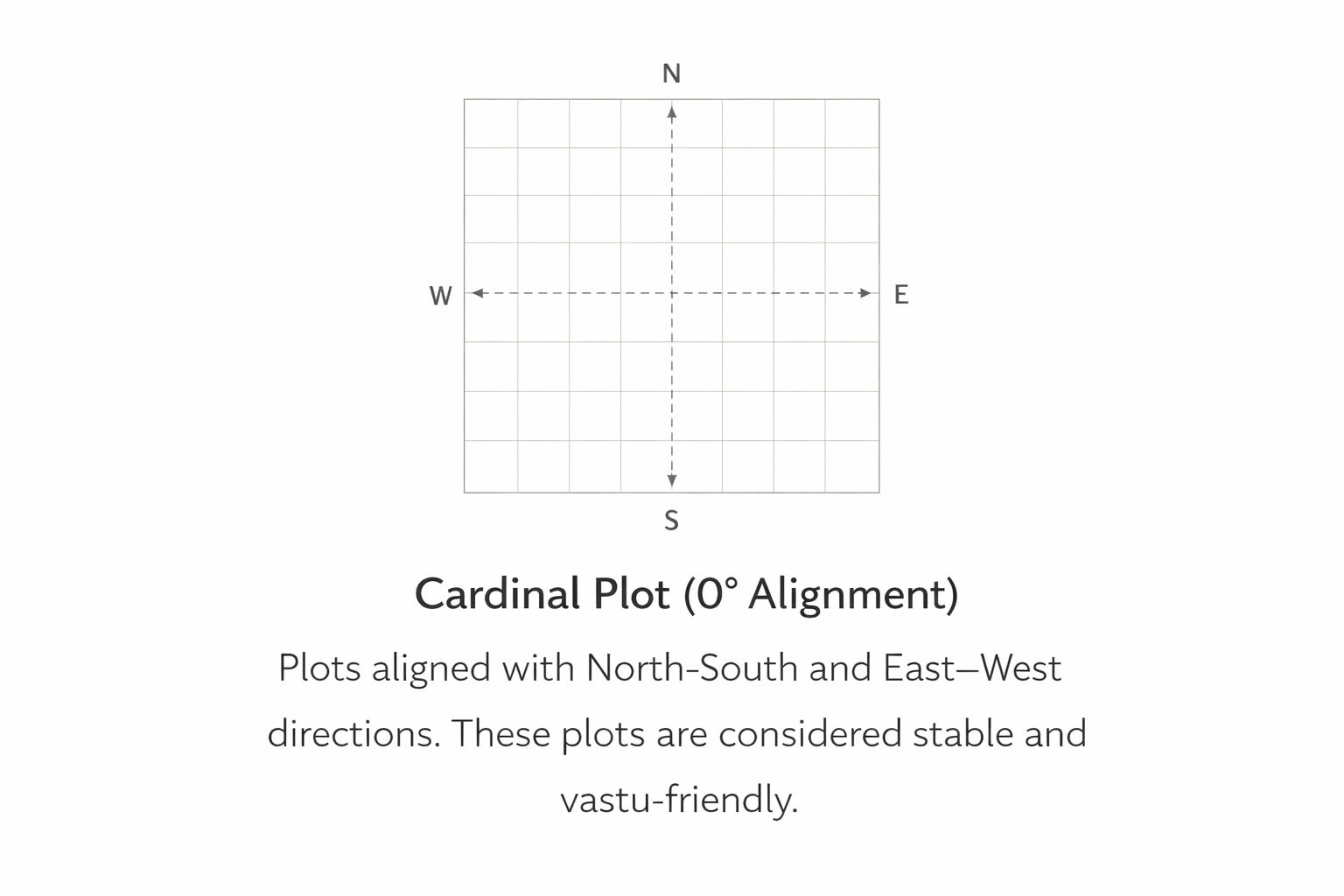
Cardinal vs Vidisha Plot Orientations and Earth's Magnetic Axis Alignment
A Vidisha Plot is a plot that is tilted or rotated and does not align straight with the main directions of North, South, East, and West. Unlike cardinal plots, the sides of a Vidisha plot are placed at an angle, usually around 45 degrees.
According to Vastu Shastra, such tilted orientation causes the energy entering the plot to become imbalanced and uneven. Since the plot does not follow the Earth's directional flow, the energy does not move smoothly.
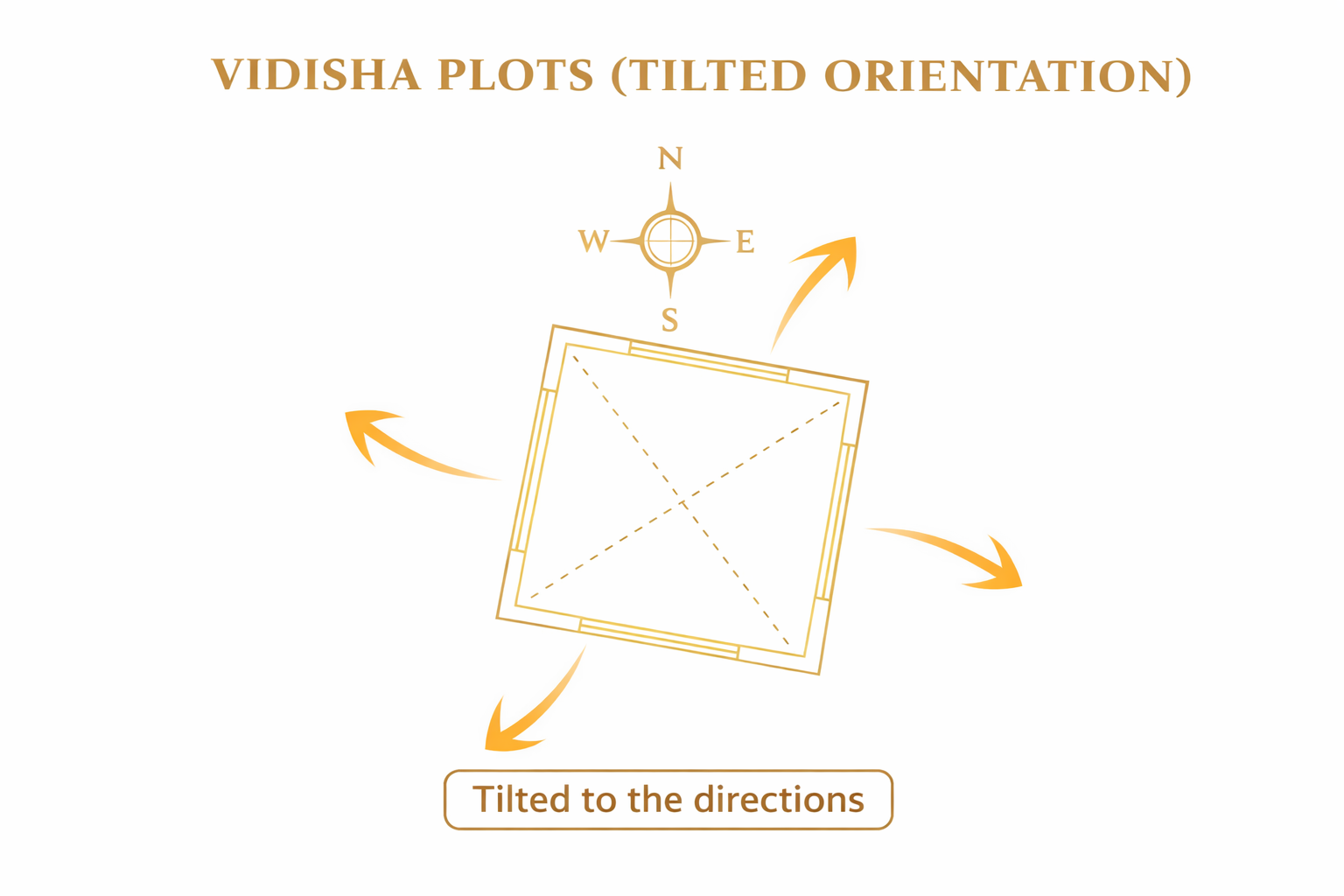
Vidisha Plots (Tilted Orientation)
A Rectangular Plot is a plot where the length and width are unequal, but all four corners are at right angles (90°). In Vastu Shastra, rectangular plots are considered favourable when they are properly aligned with the cardinal directions.
Although a square plot is ideal, a rectangular plot is the most practical and widely accepted plot shape, especially in modern cities. The ratio of width to length should not be more than 1:2.
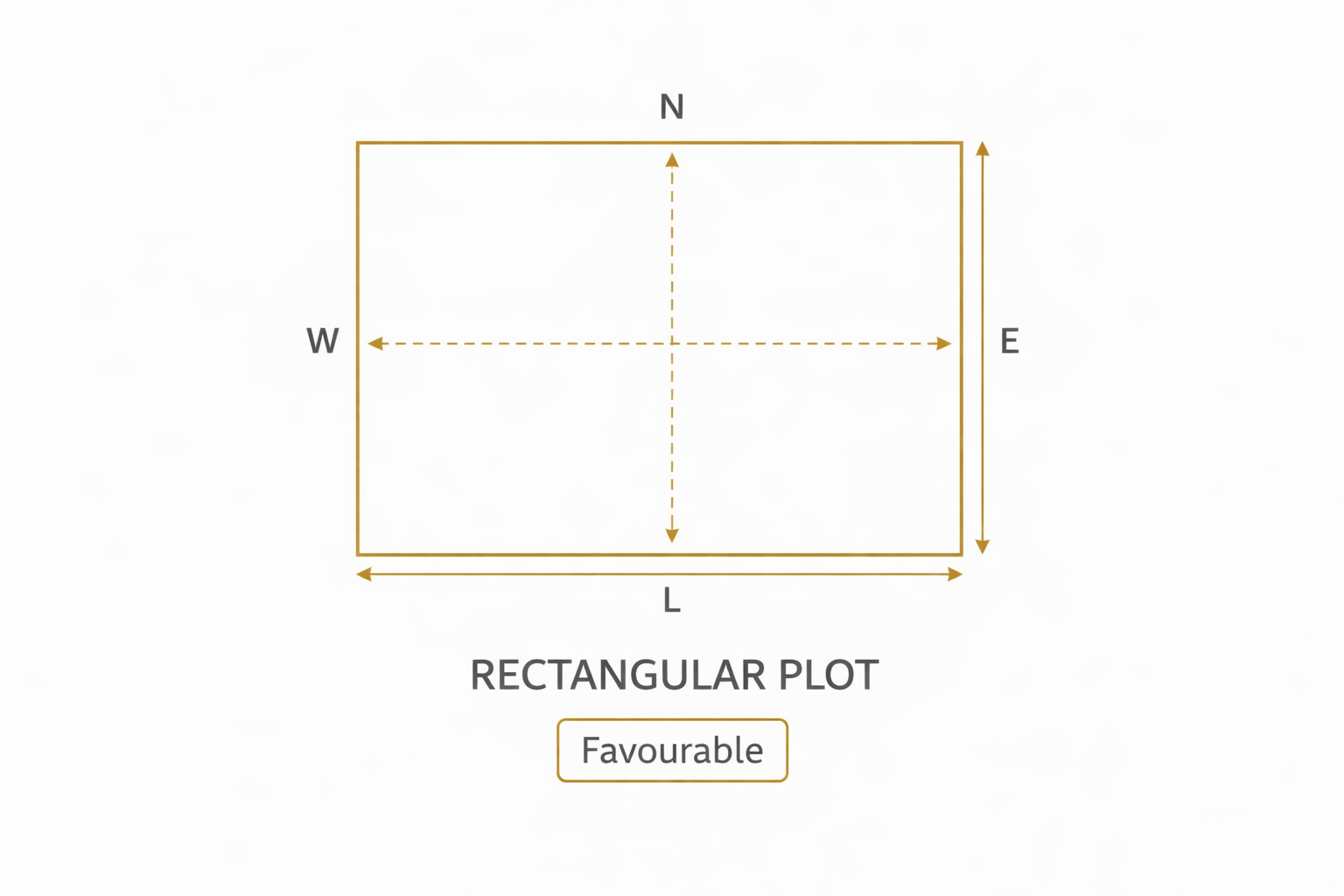
Rectangular plots allow energy to flow smoothly when proportions are balanced
A Square Plot is considered the most ideal and auspicious plot shape in Vastu Shastra. In this type of plot, all four sides are equal in length and aligned with the cardinal directions.
Because of its perfect symmetry, a square plot allows balanced energy distribution from all directions, making it highly suitable for residential, commercial, and spiritual constructions.
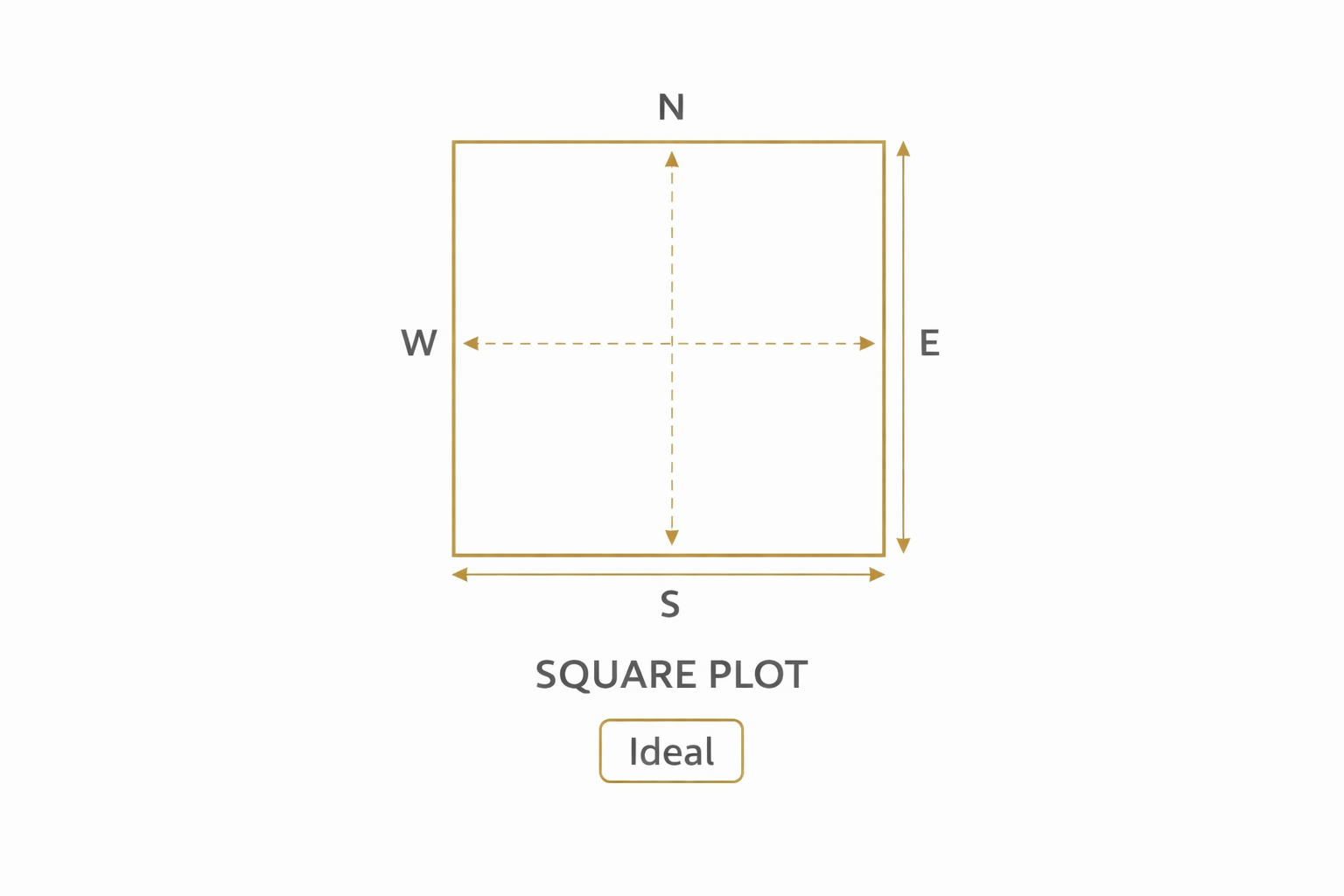
Square plots are the most ideal in Vastu Shastra
A Gaumukhi Plot, also known as a Cow Face Plot, is a plot that is narrow at the front and wider at the rear. In Vastu Shastra, this shape resembles the face of a cow and is considered highly auspicious.
Front width (W1) < Rear width (W2) — Energy flows inward and expands toward the rear.
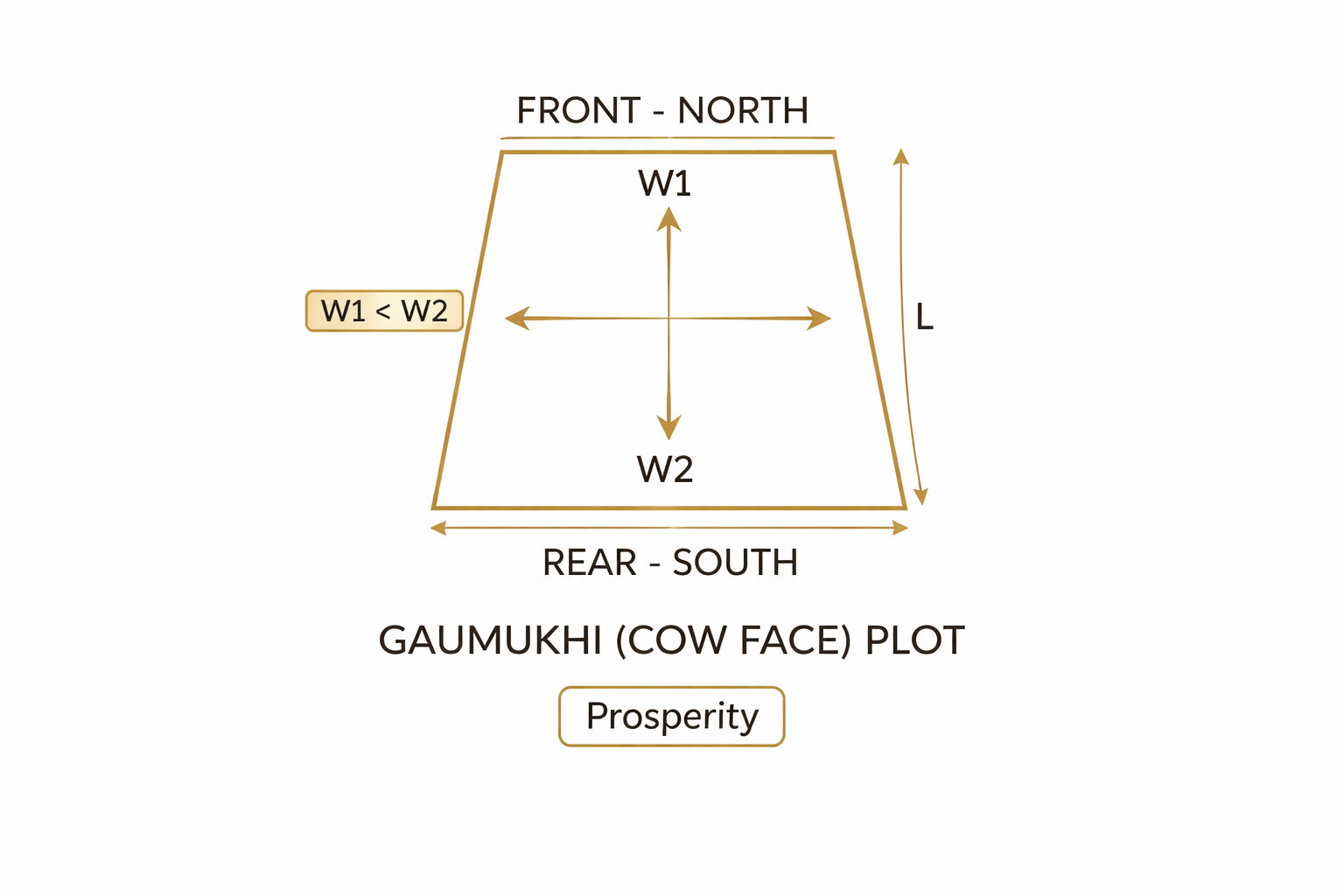
Gaumukhi plots are suitable for residence with broad part in North-East
A Shermukhi Plot, also known as a Lion Face Plot, is a plot where the front side is wider and the rear side is narrow. Its shape resembles a lion's face.
This plot shape is associated with power, authority, and leadership. Energy enters quickly and strongly, making it suitable for those in decision-making roles or business.
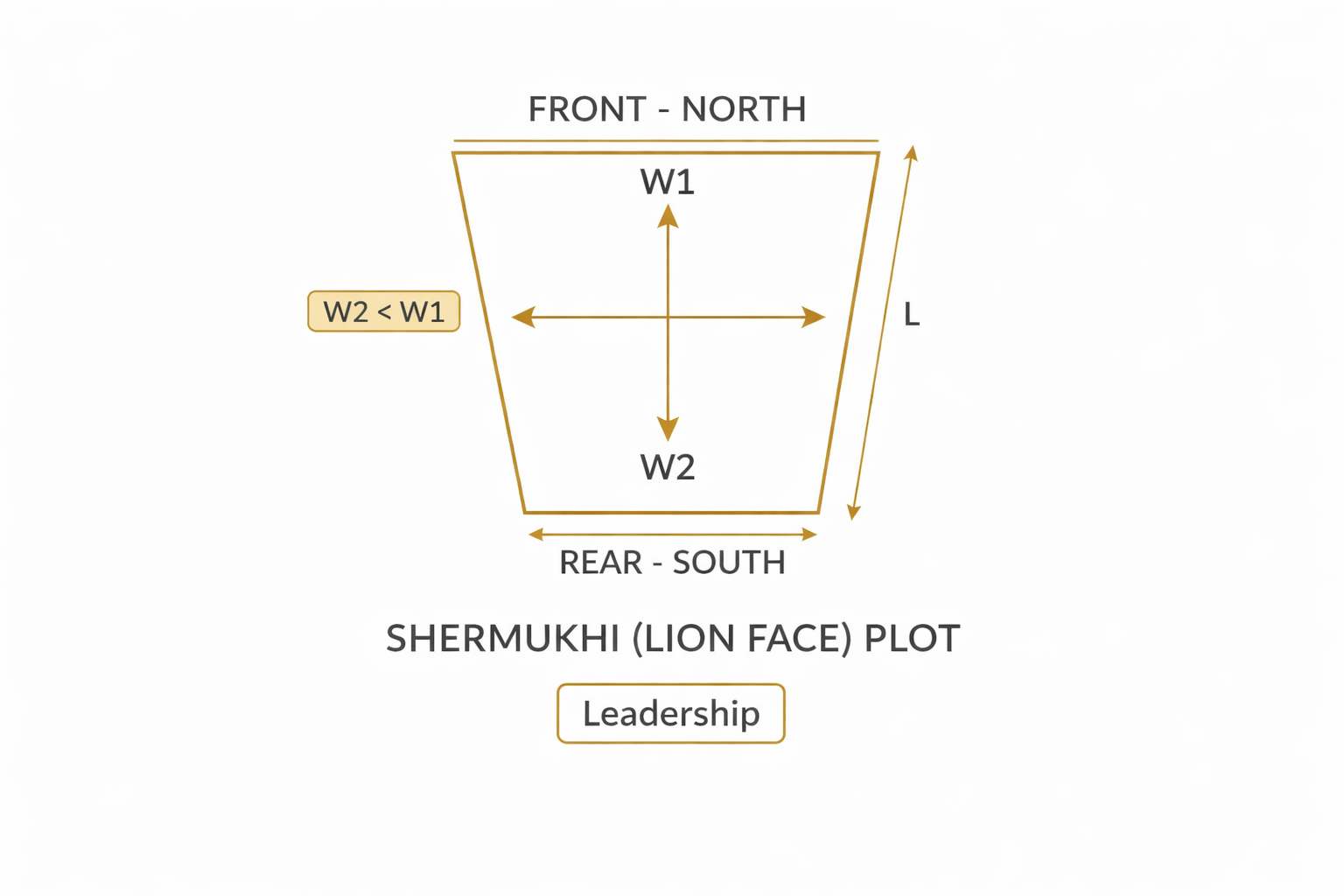
Shermukhi plots are ideal for commercial purposes
Irregular shaped plots do not have a clear and balanced form. These may include L-shaped plots, triangular plots, or plots with uneven and cut boundaries.
According to Vastu Shastra, irregular shapes disturb harmony because energy does not move smoothly across the plot. This can lead to stress, confusion, and instability.
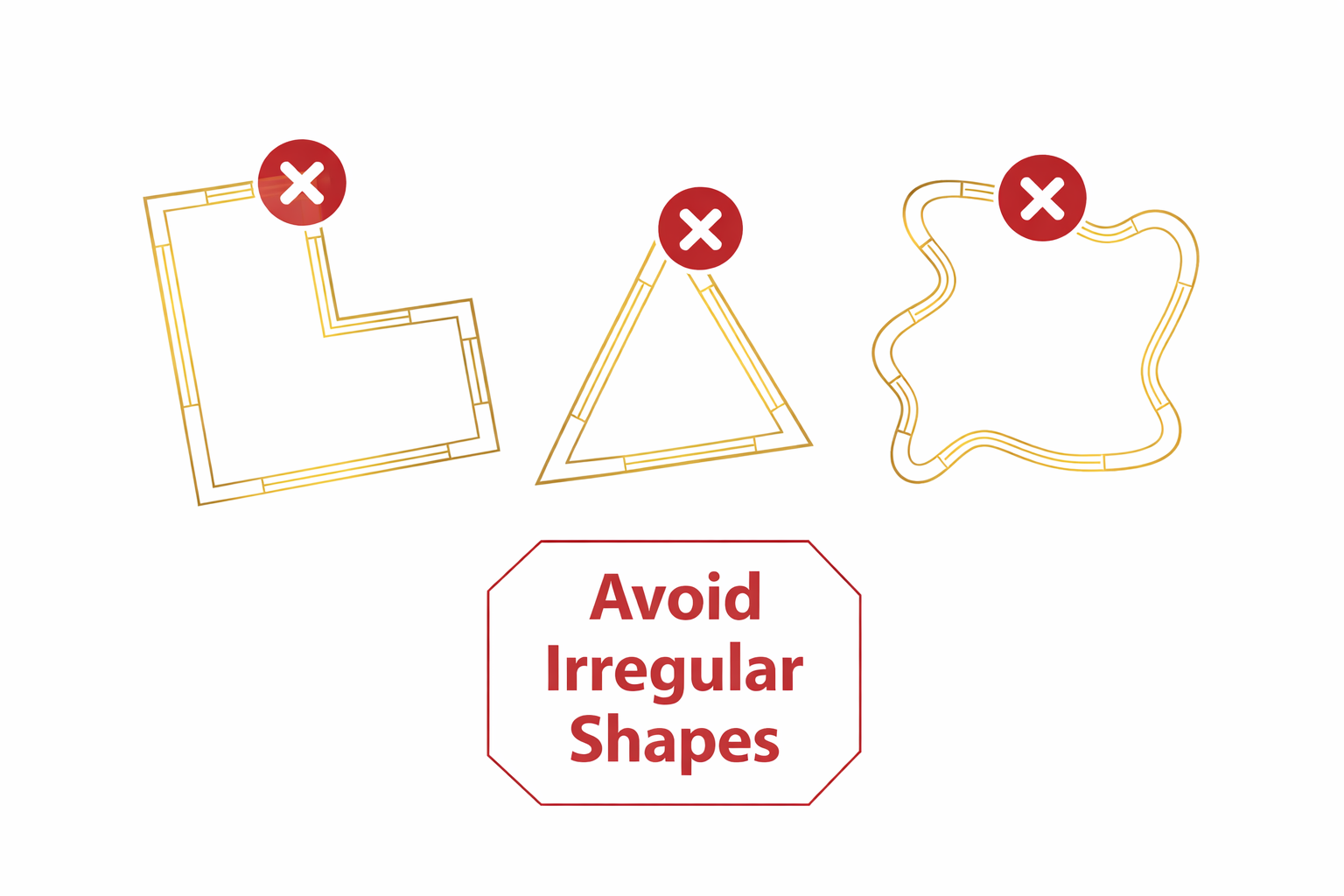
Avoid irregular plot shapes for balanced energy flow
A Vastu Vithi Shool Plot is a plot where a road comes straight and directly hits the center of the plot. The road points directly toward the land without any curve or diversion.
This type of plot creates very strong and fast-moving energy that enters the plot forcefully. Instead of spreading smoothly, the energy crashes into the property.
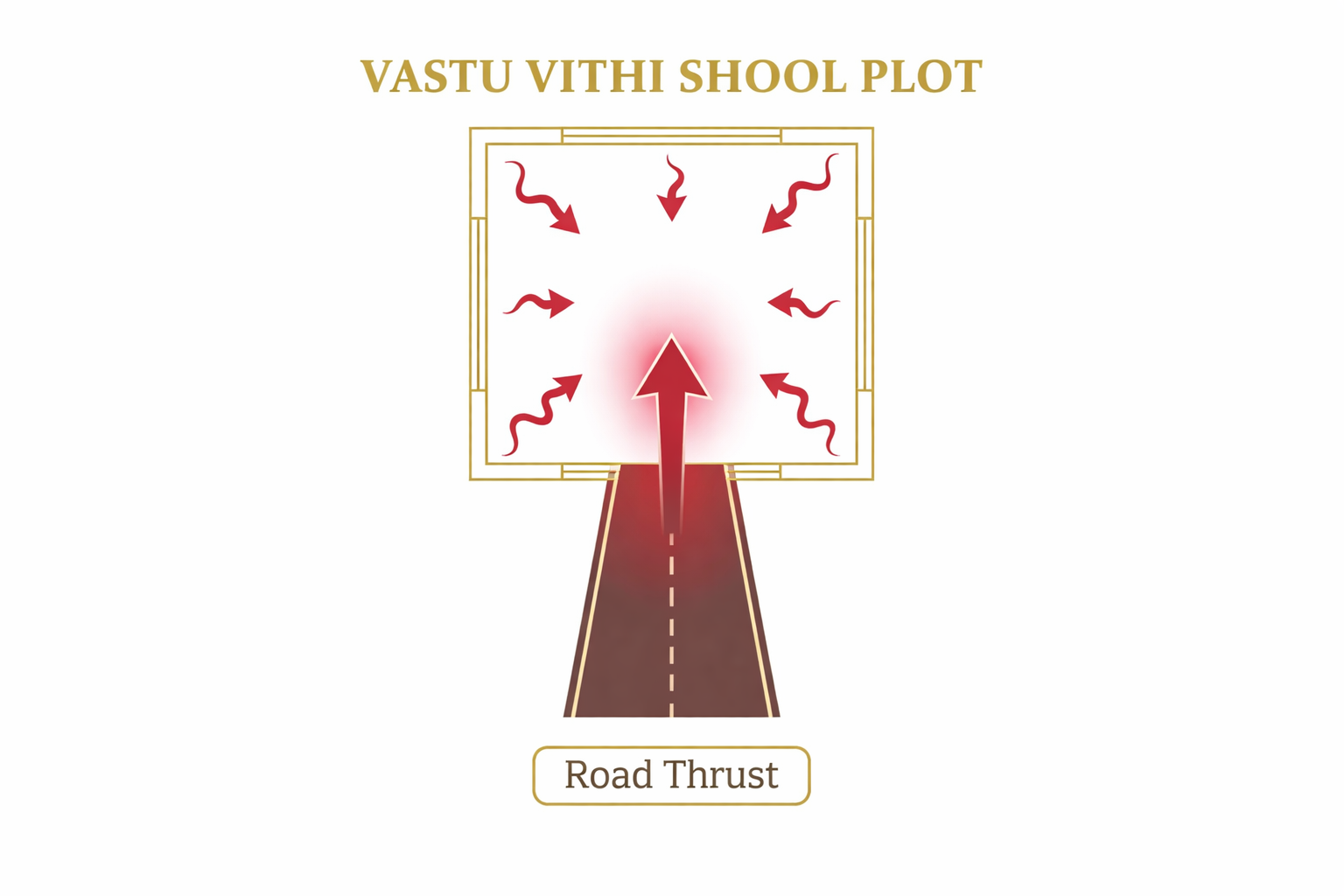
Road Thrust plots require corrective measures
A Side Road Touch Plot is a plot where the road passes gently along one side of the land instead of coming straight toward the center.
This type of plot is considered auspicious because the energy coming from the road enters the plot smoothly. The flow of energy is soft and balanced.
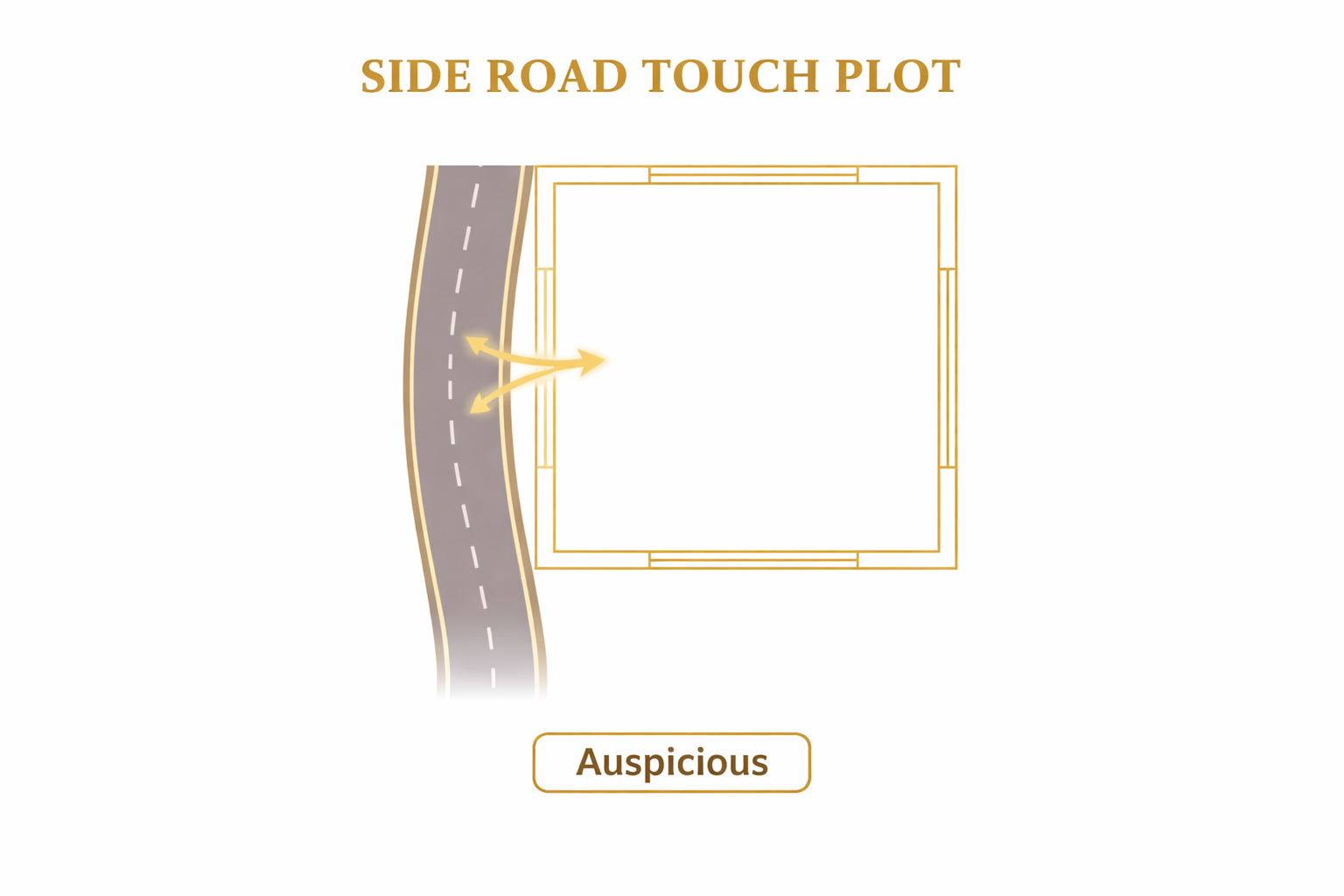
Side road touch creates balanced energy flow
A Curved Road Plot is a plot where the road curves gently around the property instead of coming straight toward it.
Curved roads are considered auspicious because they allow positive energy to move slowly and evenly. The energy does not rush or hit the plot directly.
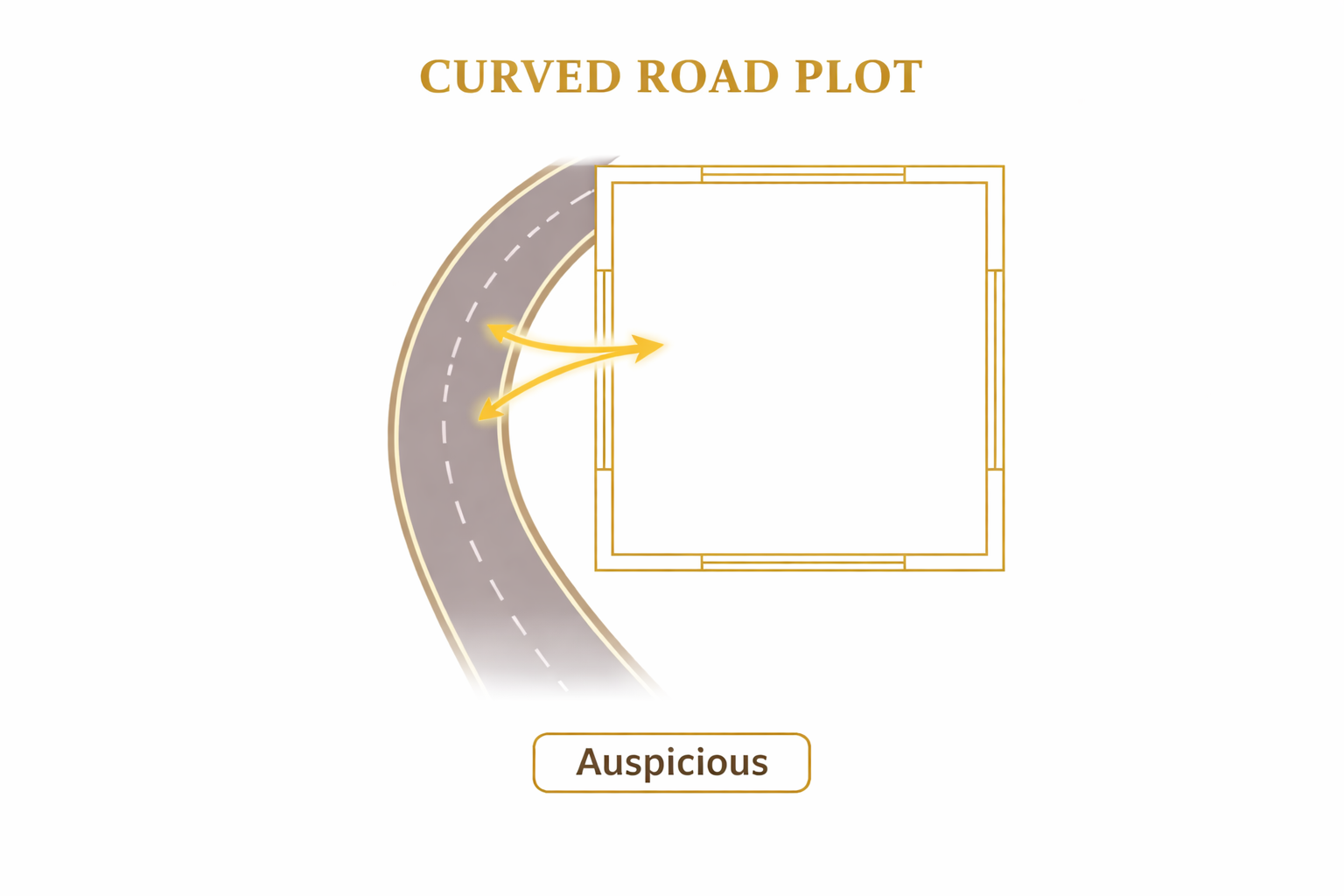
Curved roads promote harmonious energy
A Corner Passing Road Plot is a plot where the road passes near the corner of the land but does not directly hit the plot. The road turns or bends smoothly at the corner.
This type of plot is considered auspicious because the energy movement remains controlled and balanced.
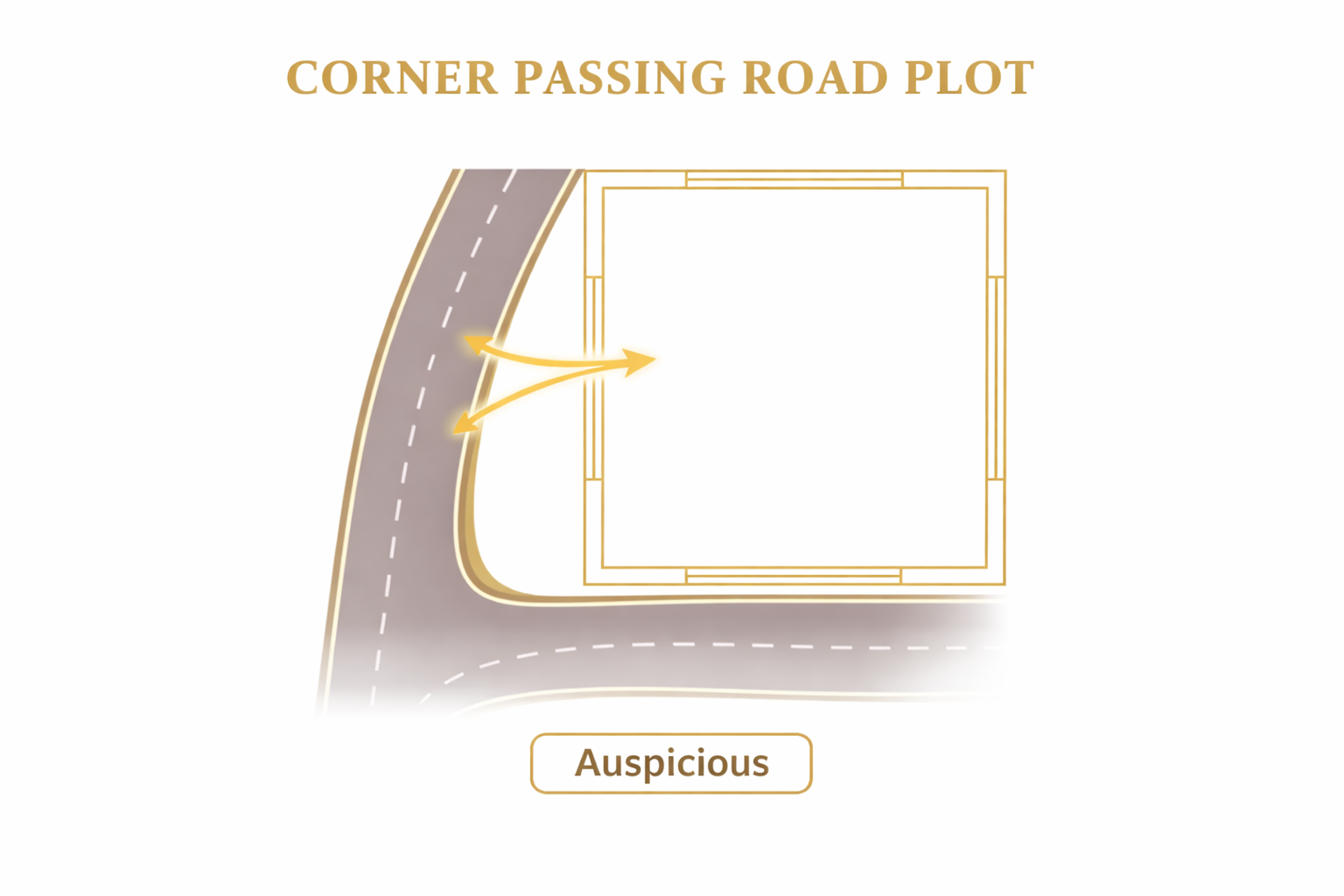
Corner passing roads maintain energy balance
A Corner Road Thrust Plot is a plot where the road comes straight and hits the corner of the plot directly. The road puts sudden pressure on one specific corner of the land.
This type of plot is considered inauspicious because the energy enters in an unbalanced and aggressive manner, disturbing the natural energy flow.
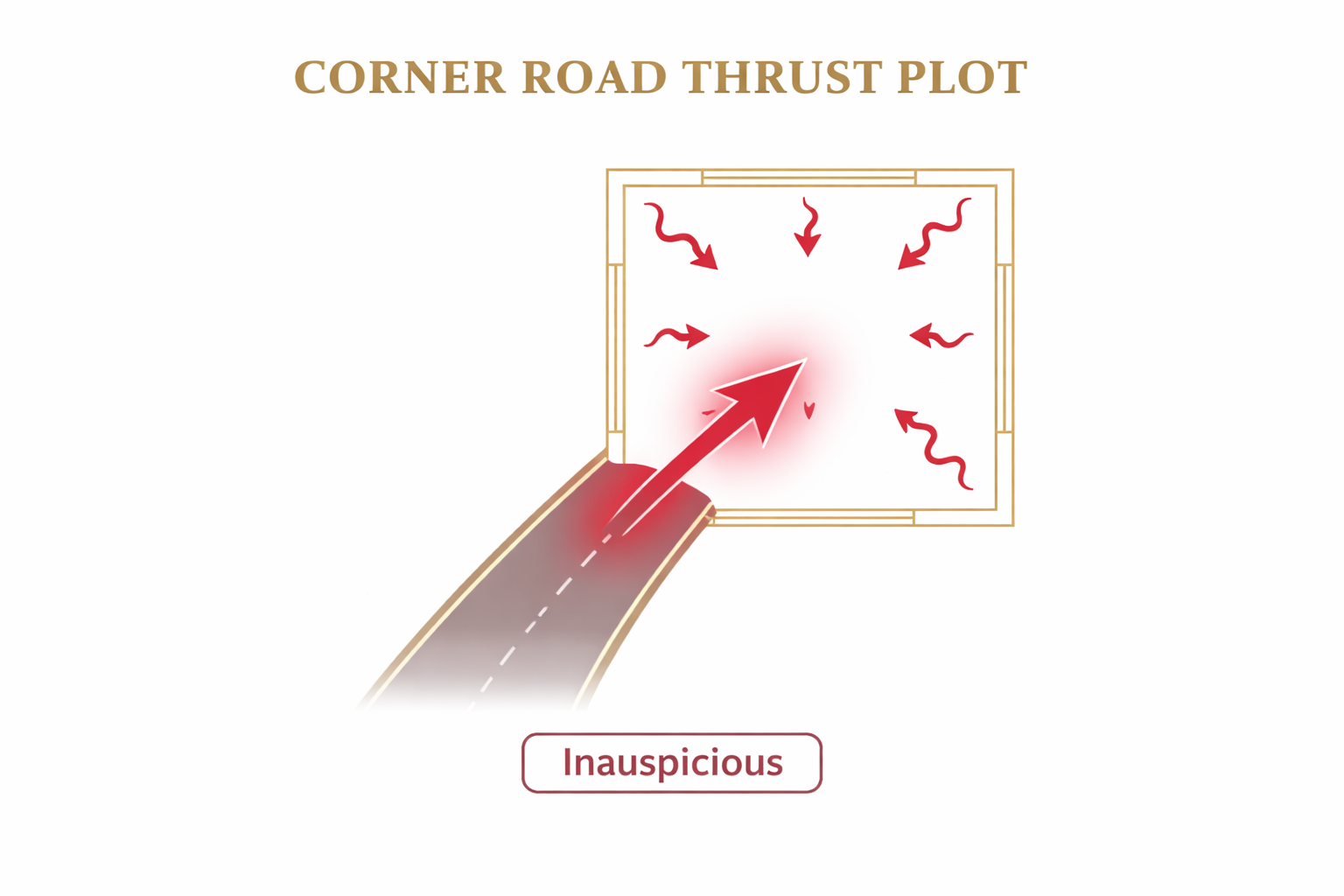
Corner road thrust creates energy imbalance
A Side Wall Road Thrust Plot is a plot where the road comes straight and hits the side wall of the property directly.
This creates an uneven and disturbing energy flow. The energy enters forcefully from one side, which can disturb balance, peace, and stability.
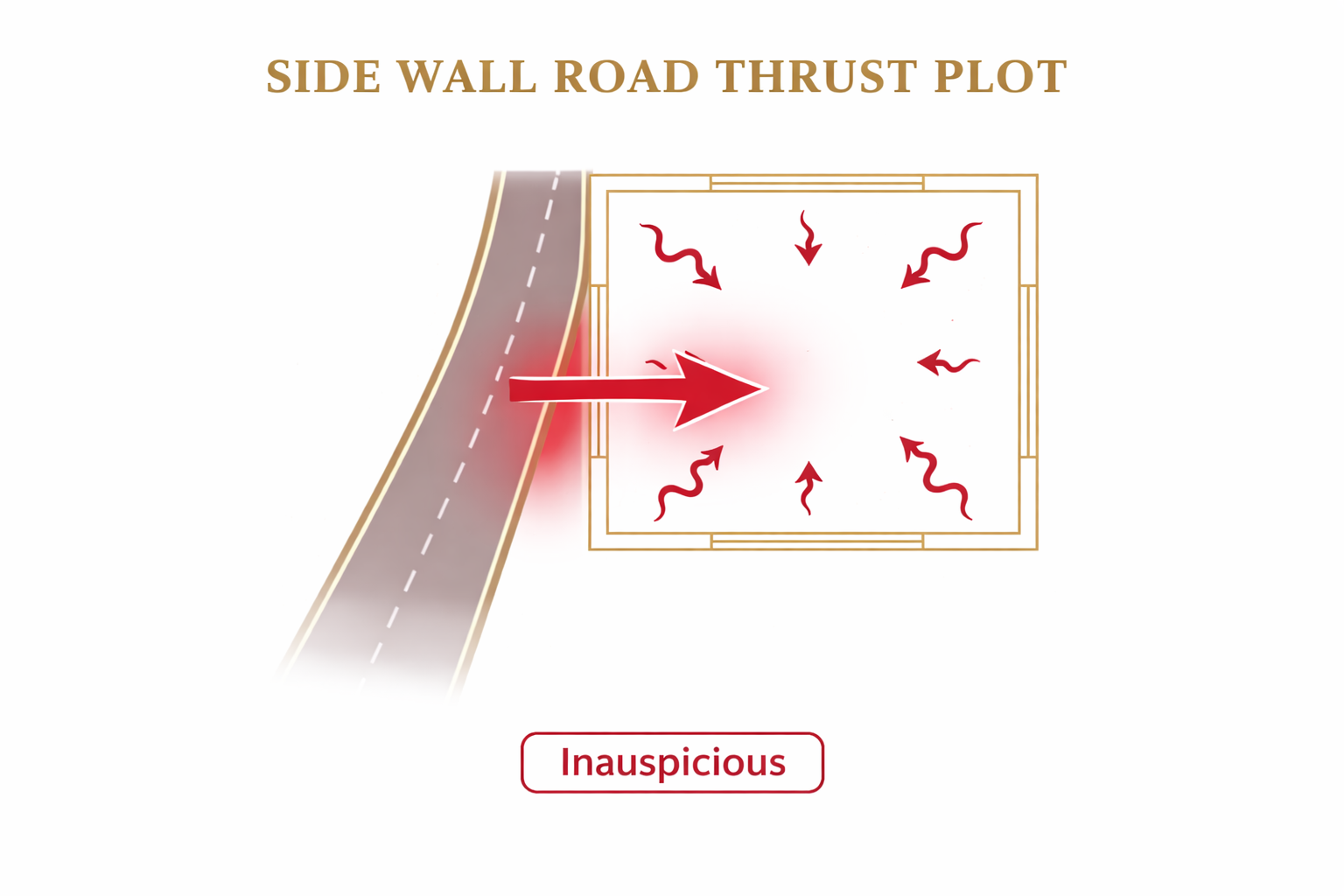
Side wall thrust requires Vastu remedies
A Diagonal Road Thrust Plot is a plot where the road approaches the land at a slant or diagonal angle and directly hits the plot.
This creates confused and unstable energy flow. Since the energy enters diagonally, it causes imbalance throughout the space.
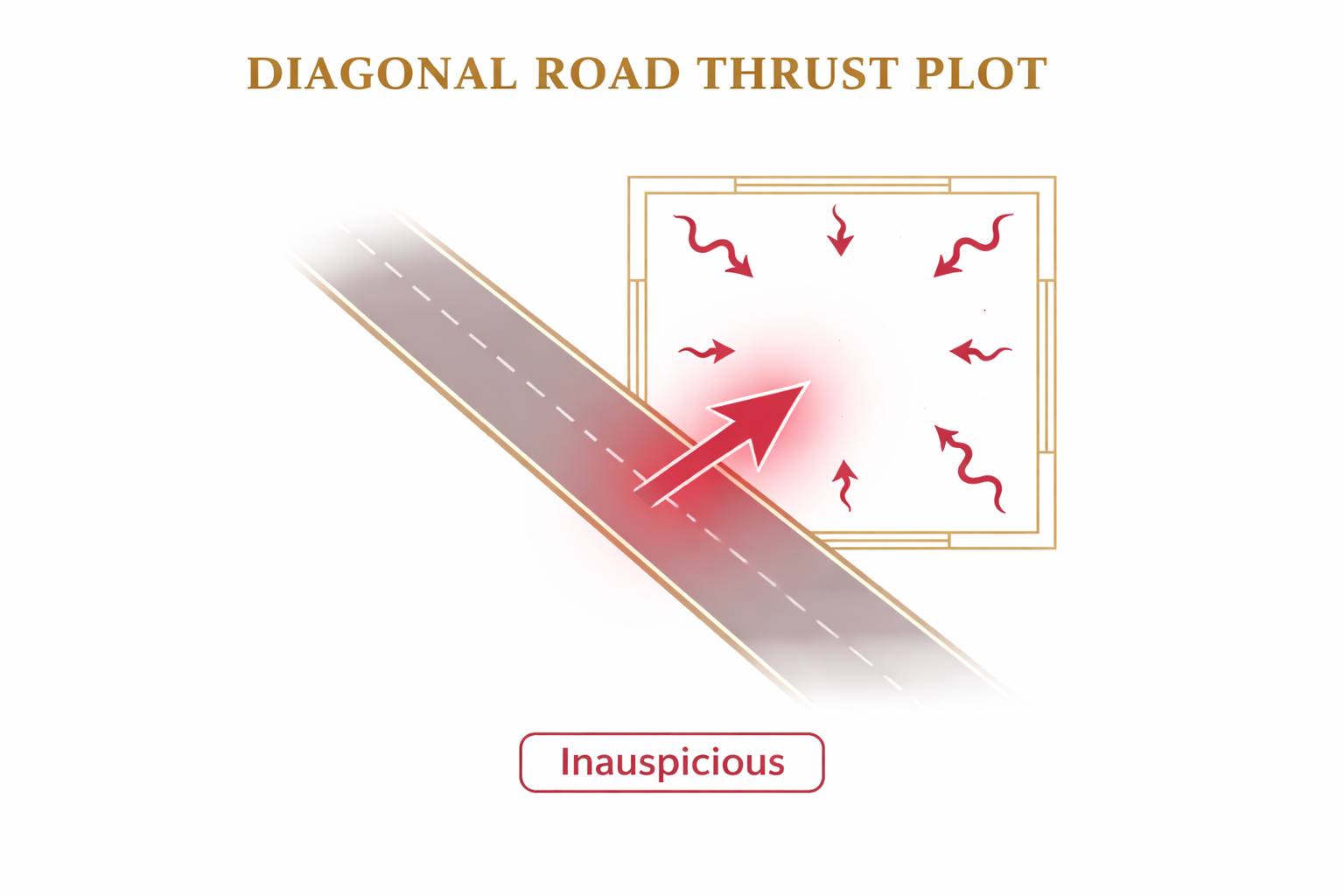
Diagonal thrust creates unstable energy
Very often there are plots which have extended or reduced corners or directions. These extensions or reductions definitely have a positive or negative impact on the owner and family.
Extensions are favorable and auspicious ONLY in these three directions. They bring prosperity and growth.
Reduction in NE directions or extensions in SW are very inauspicious and must be corrected.
North, East, West (South closed) - Most auspicious for residence and commercial purposes.
North, South, East (West closed) - Good for commercial purposes.
East, West, South (North closed) - Good for residence and commercial ventures run by women.
North, South, West (East closed) - Good for commercial purposes but medium category for residence.
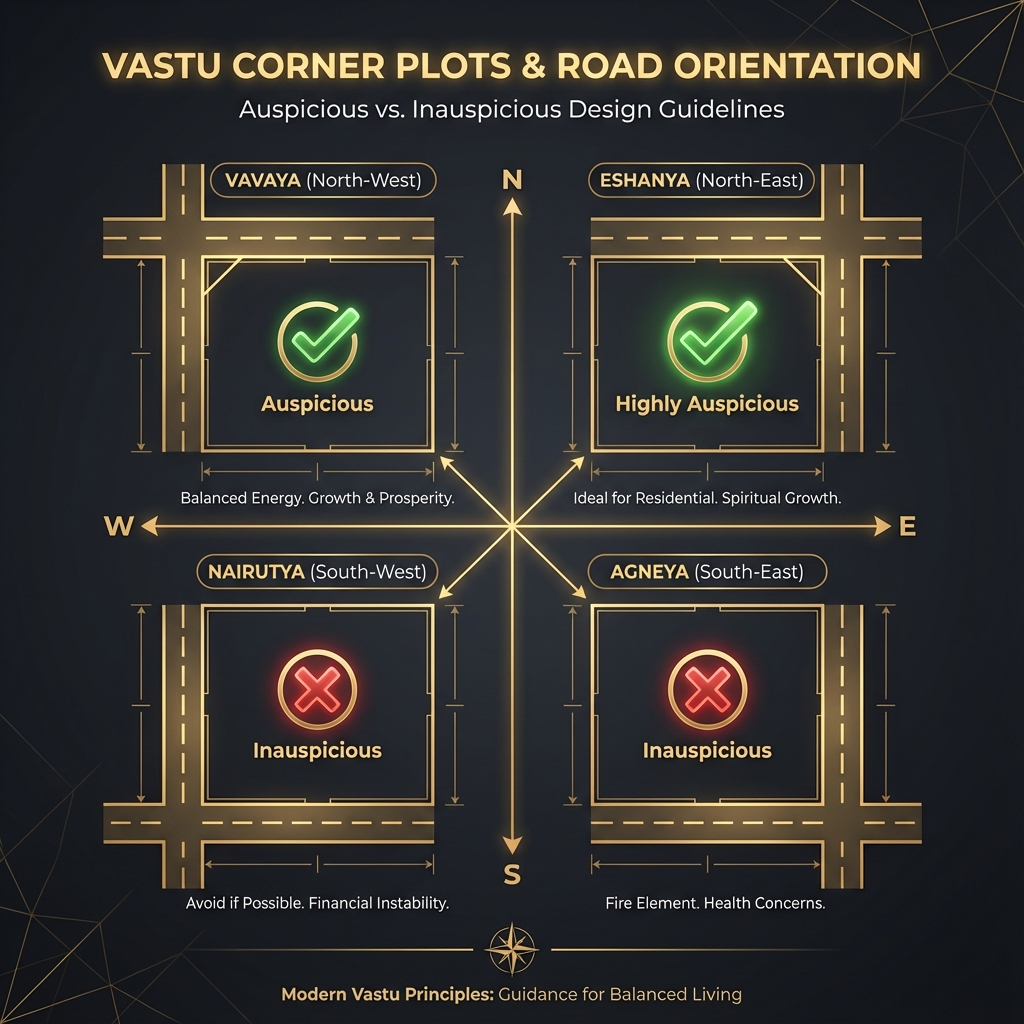
Types of Corner Plots with Road Positions
Eshanya Plots (North and East roads) - Excellent and most auspicious. Highly recommended for both residential and commercial use.
Vavaya Plots (North and West roads) - Care should be taken that the South-West corner is higher than the North-East.
Agneya Plots (South and East roads) - Not good. Excess fire element leads to financial and mental problems.
Nairutya Plots (South and West roads) - Should be avoided. Can cause instability, losses, and health issues.
Avoid a plot in proximity to any religious building like a temple, gurudwara, church, etc. Maintain at least 100 meters distance.
Avoid buying a small plot between two large plots. This creates crushing energy that affects inhabitants adversely.
A water resource in the South and West is very inauspicious. Water resources in North and East are best.
Mountains and hilly areas in the South and West are good. They provide support and stability to the plot.
Avoid buying a plot close to a cremation or burial ground. Such locations carry heavy negative energies.
Slope of the plot - The plot should slope gently from South-West to North-East for optimal energy flow.
Once you have a Vastu-compliant plot, proper placement of construction is equally important.
The North-East corner is sacred and should have maximum open space. This allows positive cosmic energies to accumulate and flow into the dwelling.
The South-West should have the heaviest construction, including the master bedroom or main living areas. This provides stability and grounding.
Get expert Vastu guidance before making one of life's biggest decisions. Our consultation can help you avoid costly mistakes and ensure prosperity for generations.
Book Plot Vastu Consultation